Beyond Physics

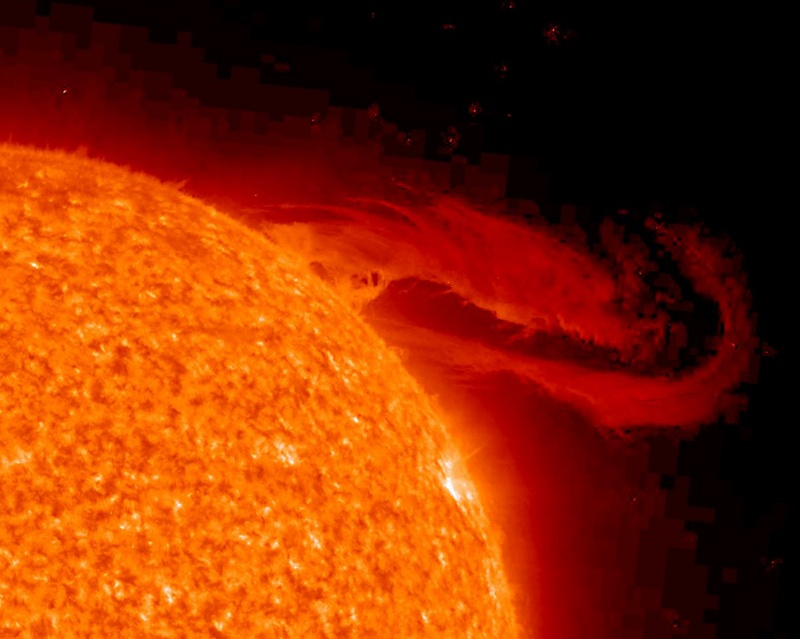
The relationship between physics and metaphysics (literally "beyond physics") is a fascinating one. It helps sometimes to remember that we can approach God from the side of philosophy and not just on the basis of revelation. Terry Pratchett, the English fantasy writer who has sold more than 60 million books and once said he was "rather angry with God for not existing", in a more recent interview ventured the view that "It is just possible that once you have got past all the gods that we have created with big beards and many human traits, just beyond all that, on the other side of physics, they [the gods] just may be the ordered structure from which everything flows." Indeed, the Christian idea of God, properly understood, is of something that could not not exist, if the world is to make any kind of sense.

Ever since 2006 in Regensburg, Pope Benedict XVI has spoken about the need for "broadening our concept of reason and its application". But what
does this mean? In the Christian-Platonic tradition, goodness and beauty possess causal significance because the existence and structure and unfolding of the world as we perceive it is understood -- makes "sense" -- as their expression in matter and time. But the modern scientific revolution reduced causal explanation to an account of how one thing always leads to another, and the mind-body dualism we inherited from Descartes tends to flip into a monism of matter or spirit.

In the ancient view there are four main types of explanation or account that we can give for things: final, formal, efficient and material. The final cause is what they are for, or what purpose they serve. The formal cause is the inner shaping idea that makes them what they are. The first of these types of explanation dropped entirely out of view in modern science, and the second was reinterpreted to refer to a mathematical account of nature. The pragmatic bent of modern civilization was mainly interested in the efficient cause, or what brings something about and makes it do what it does, and the material cause, or what it is made of.

The narrowing of reason to these two or three kinds of account transformed the way we think about the world. We were no longer looking for the underlying idea or the purpose of things, but only for the things into which we could break it down (particles, energy), and the rules that determined how it behaved (laws of nature). But is there a way once again to broaden reason, perhaps by reintroducing final causality, or rediscovering the qualities of form? My book engages that question. But recently the physicist Stephen Barr (author of a forthcoming booklet on Science and Religion for CTS) has written an article in Faith magazine that readers may find interesting. In "The Symbiosis of Science and Metaphysics", he argues that the "four causes" of Aristotelian/ Thomistic metaphysics need to be re-thought, not merely re-introduced, in dialogue with modern science. Physics no longer conceives of an efficient cause as one thing acting upon another, but rather in terms of mutual interaction. Time itself is relative to one's position. Subatomic particles have no individuality. All of this raises interesting questions for theistic philosophers, but they need to be able to speak and understand the language of science in order to engage in a dialogue. They will find, if they do so, much stimulus to the development of their own discipline.
Music unforgotten


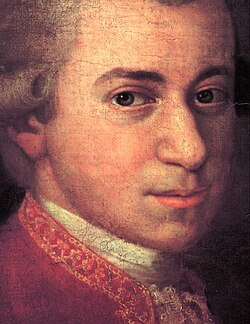
Listeners to Radio Three had a treat over Christmas. The BBC devoted twelve solid days and nights to playing everything composed by Mozart. What struck me is how, where Beethoven comes over as emotional, heroic and tragic, and Bach as mathematical, angelical and lyrical, Mozart often seems simply “playful”. But this may be connected with the reason his music is so profound. It resembles nature, in the sense of natura naturans (“nature naturing”, or doing what nature does). In nature, creative freedom always manifests a law – but the deepest law of all is the pure ebullient spontaneity of the Good.

John Tavener said of Mozart (in the programme notes for Kaleidoscopes in 2005):

I have always regarded Mozart as the most sacred and also the most inexplicable of all composers. Sacred, because more than any other composer that I know, he celebrates the act of Being; inexplicable, because the music contains a rapturous beauty and a childlike wonder that can only be compared to Hindu and Persian miniatures, or Coptic ikons.

In an essay in the Winter 2006 issue of Communio, Fr Jonah Lynch sees in Mozart a kind of Catholic balance that reflects the paradox of the Incarnation:

Mozart’s melodies carry something of the birth of an infant God, the remarkable union of opposite absolutes, total simplicity and infinite depth. Only here is the completely free and ever-surprising united to formal structural perfection.

The work of Mozart and the other great composers echoes the “unforgotten music” that we carry in our bones. It opens our senses, so that we feel the air of Paradise – what Josef Pieper in Only the Lover Sings calls the “paradise of uncorrupted spiritual forms” – and notice the fragrance that still clings to our coats of skin. Perhaps it is not too much to suggest that when we hear this music, even if like the Good Thief we are still hanging on the cross, we become more conscious of the possibility of grace.

Constructing the Universe Classroom

Geometer and educationalist Michael Schneider has started a range of classes for young and old at his place in San Anselmo, CA. He writes: "I prefer to facilitate learning by beginning with a youngster's own natural interests. Some interests are fluid, and others lead to ongoing projects in some depth. These classes are not 'tutoring' sessions for the usual school topics although they often involve the same skills used in the context of an investigation. Young people can learn to see and appreciate the excellence of nature and its patterns which teaches many valuable lessons. I approach each subject to promote wonder at the ordinary, the interconnectedness of knowledge and a love of learning in general." Go HERE for details.

Natural selection

A couple of times in this blog I have commented on the theory of evolution and promised to come back to it. Though I did not address it directly in my book, it is one of the big influences on modern education (along with Freud, who deserves separate treatment). But the influence is not so much from the science of evolution as from the "idea", often exaggerated into an ideology that purports to explain everything. One of the most informative and enjoyable presentations of the current state of knowledge and speculation is Nick Lane's Life Ascending: The Ten Great Inventions of Evolution. The "inventions" in question are life itself, DNA, photosynthesis, the complex cell, sex, movement, sight, hot blood, consciousness and death. In each case, science is trying to show how these breakthroughs were achieved without intelligent design, by physiochemical processes over long stretches of time. Though many of the answers remain elusive, the search for them has thrown up a huge amount of fascinating information. In this sense the book is a treasure trove. Lane concludes that the "convergence of evidence" from many fields makes it impossible seriously to doubt that life did evolve. Whether this is compatible with faith in God is a question he sensibly leaves open. That is something I debated with Clive Copus in the Catholic Herald last year. Readers interested in this question would do well to look at writings by Simon Conway Morris and Conor Cunningham. You will also find a number of relevant articles on the main Second Spring site, if you look in the online Articles section under Caldecott, Case, Dulles, Fedoryka, Hanby ("Saving the Appearances"), Olsen and Schonborn.

From Quadrivium to... Trivium

New from www.woodenbooks.com
Beauty for Truth's Sake was about the four liberal arts known collectively as the Quadrivium. I wanted it to be as practically helpful as possible to people working to reintegrate wisdom and a sense of beauty and the sacred back into education. On this blog and on the main site where the book is listed I continue to place material to supplement what is in the book. One of the resources I recommended is a series of little paperbacks published by Wooden Books on topics such as Harmony, Sacred Geometry, Astronomy, etc. Now the publisher has rolled all these little books into one impressive textbook, the cover of which is reproduced on the right. I thought you'd like to know!

So that is the Quadrivium. But that is only four of the seven liberal arts. Maybe now we should turn our attention to the remaining three, the Trivium of grammar, logic and rhetoric. According to Hugh of Saint Victor, summarizing the tradition in the high Middle Ages, "Grammar is the knowledge of how to speak without error; dialectic is clear-sighted argument which separates the true from the false; rhetoric is the discipline of persuading to every suitable thing." The Quadrivium is about mathematical symbols and geometry (numbers and shapes), while the Trivium is about verbal symbols and the arts of language. The interest of educators in the Trivium and in the Classical Curriculum generally was fuelled by a famous essay of Dorothy Sayers called "The Lost Arts of Learning". (There is also a classic textbook on the subject by Sister Miriam Joseph). It is widely agreed that the skills of speaking, thinking, remembering, communicating and debating are endangered by a culture of instant electronic social networking, images and sound-bites. Yet if we cannot think for ourselves, what becomes of our freedom?

Look and Learn

Classical Montage by Angus McBride
For a boy like me, growing up in England in the 1960s as part of the middle class, Look and Learn is a phrase to conjure with. It evokes whole worlds of imagination and knowledge. Look and Learn was a weekly educational magazine that was carefully built up over the years into a bound set of encyclopedias, each issue full of wonderfully informative and interesting stories and pictures. (This picture is used by kind permission.) Many of these educational treasures have since been reprinted in a limited number of volumes, but the whole archive is available on a web-site for the use of teachers and parents in the 21st century. Do go there and explore - I highly recommend it.

And while I am looking back, I may as well mention the other magazine I received each week - the Eagle, with its very English space-hero Dan Dare being the main attraction. The artwork and tone of the whole thing beat most other comics into the ground, and the artist Frank Hampson won all kinds of awards from the comic art community. There is a Dan Dare web-site where you can see a lot of what went on in this splended series.

In space no one can hear you sing...

The old idea of the "music of the spheres" seems to be coming back into fashion. Astronomers at the University of Sheffield have managed to record for the first time the "eerie musical harmonies" produced by the magnetic field in the outer atmosphere of the sun. They found that huge magnetic loops coiling away from the outer layer of the sun's atmosphere, known as coronal loops, vibrate like strings on a musical instrument.

Other astronomers have done the same for a much more distant and larger star, KIC 11026764, nicknamed Gemma, about 3,100 trillion miles away from the Earth. "Essentially stars resonate like a huge musical instrument," said Dr Bill Chaplin. "Stars make sounds naturally but we can't hear this as it is has to travel through space. Like a musical instrument, stars are not uniformly solid all the way to their core, so the sound gets trapped inside the outer layers and oscillates around inside. This makes the star vibrate causing it to expand and contract. We can detect this visually because the star gets brighter and dimmer and so we can reconstruct the sounds produced from these vibrations."

The scientists at the Large Hadron Collider (where high-energy collisions of subatomic particles result in temperatures of ten trillion degrees) have also turned their readings of the energies released by particle collisions into sound, and are planning to stage a concert of the resulting music.

All of this is very reminiscent of Pythagoras and the search for cosmic harmonies that started off the history of science in the first place. But silence is coming back into fashion too. A successful film (Into Great Silence) and TV series (The Big Silence) have transfixed viewers with the deep, meditative silence of prayer. A record featuring two minutes of complete silence is tipped to rise to the top of the music charts this weekend, for Remembrance Sunday. The director general of the Royal British Legion said "we felt the UK public would recognise the poignancy of silence and its clear association with remembrance." In his recent exhortation, Verbum Domini, the Pope emphasizes the important role of silence in the Liturgy. "The word, in fact, can only be spoken and heard in silence, outward and inward." Thus people must be "educated in the value of silence."  "Rediscovering the centrality of God’s word in the life of the Church also means rediscovering a sense of recollection and inner repose.... Only in silence can the word of God find a home in us, as it did in Mary, woman of the word and, inseparably, woman of silence."

The silence of space is due to the fact that sound cannot travel through a vacuum. But sound is just a particular vibration, and the whole universe is made of vibrations of various sorts, so the music of creation is everywhere. Composers and musicians simply "tune in" to some deep harmonies in nature and filter out the dissonance. That seems to be the message of a sweet modern fairy-tale of a movie, August Rush, mentioned in the sidebar. But everything takes place against a background of silence, which - a bit like the "vacuum" of space - is anything but empty, but rather full of potential energy. By listening to silence we still the unnecessary turmoil of our minds and hearts, allowing the meaning of creation to sound forth.